

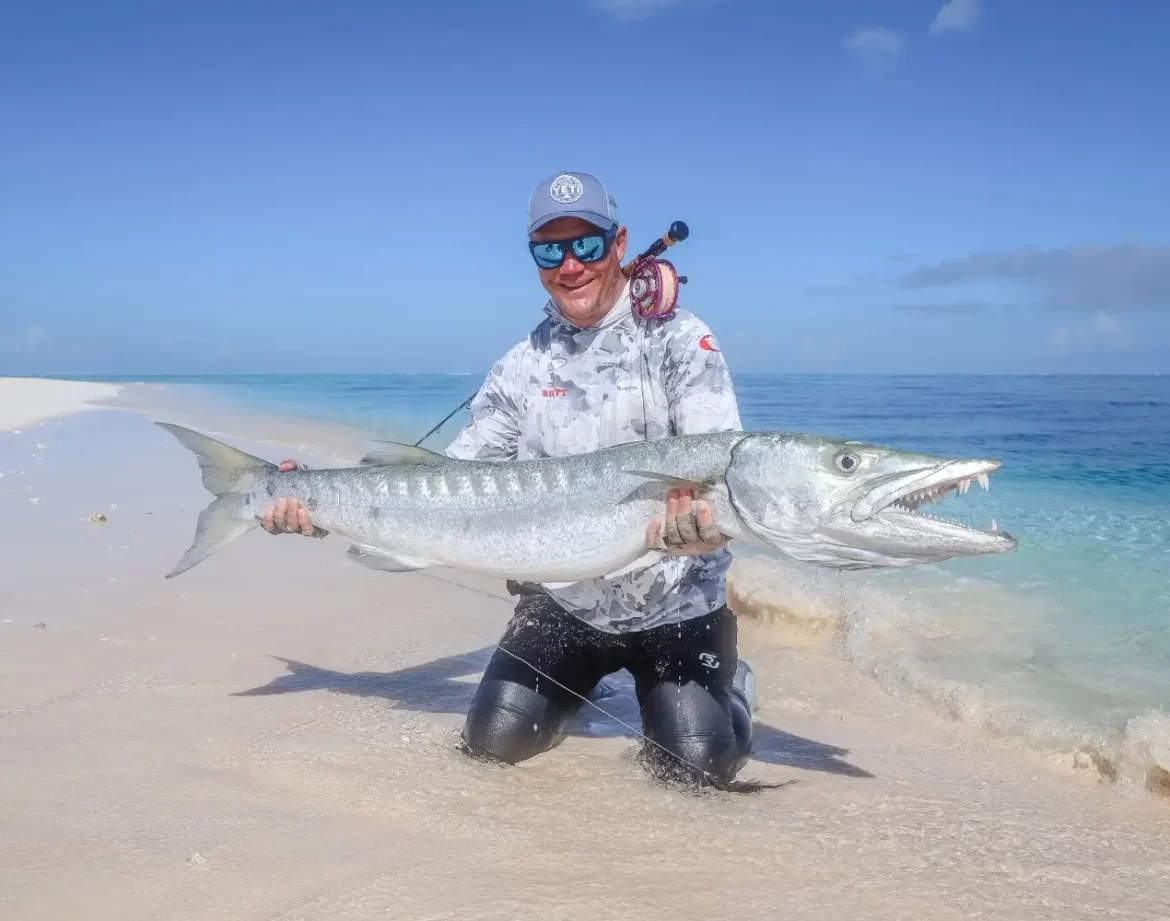
Barracuda Fishing: Expert Tips, Gear, and Techniques
Written By: Captain Kody Michael
Introduction
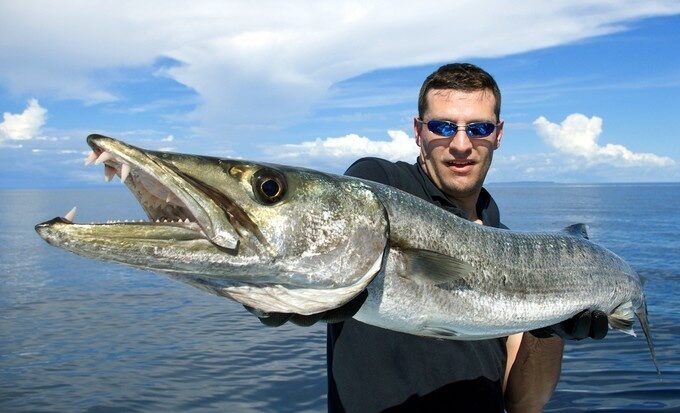
If you’ve ever been offshore and spotted a long, silver flash darting through the water, chances are you’ve encountered a barracuda. Known for their menacing appearance, razor-sharp teeth, and lightning-fast strikes, these fish are both exciting and intimidating.
Barracuda fishing offers anglers the thrill of battling one of the ocean’s most aggressive predators, and with the right knowledge, even beginners can enjoy success. Whether you’re casting over shallow reefs or trolling deep offshore waters, barracuda fishing demands the right gear, techniques, and safety awareness.
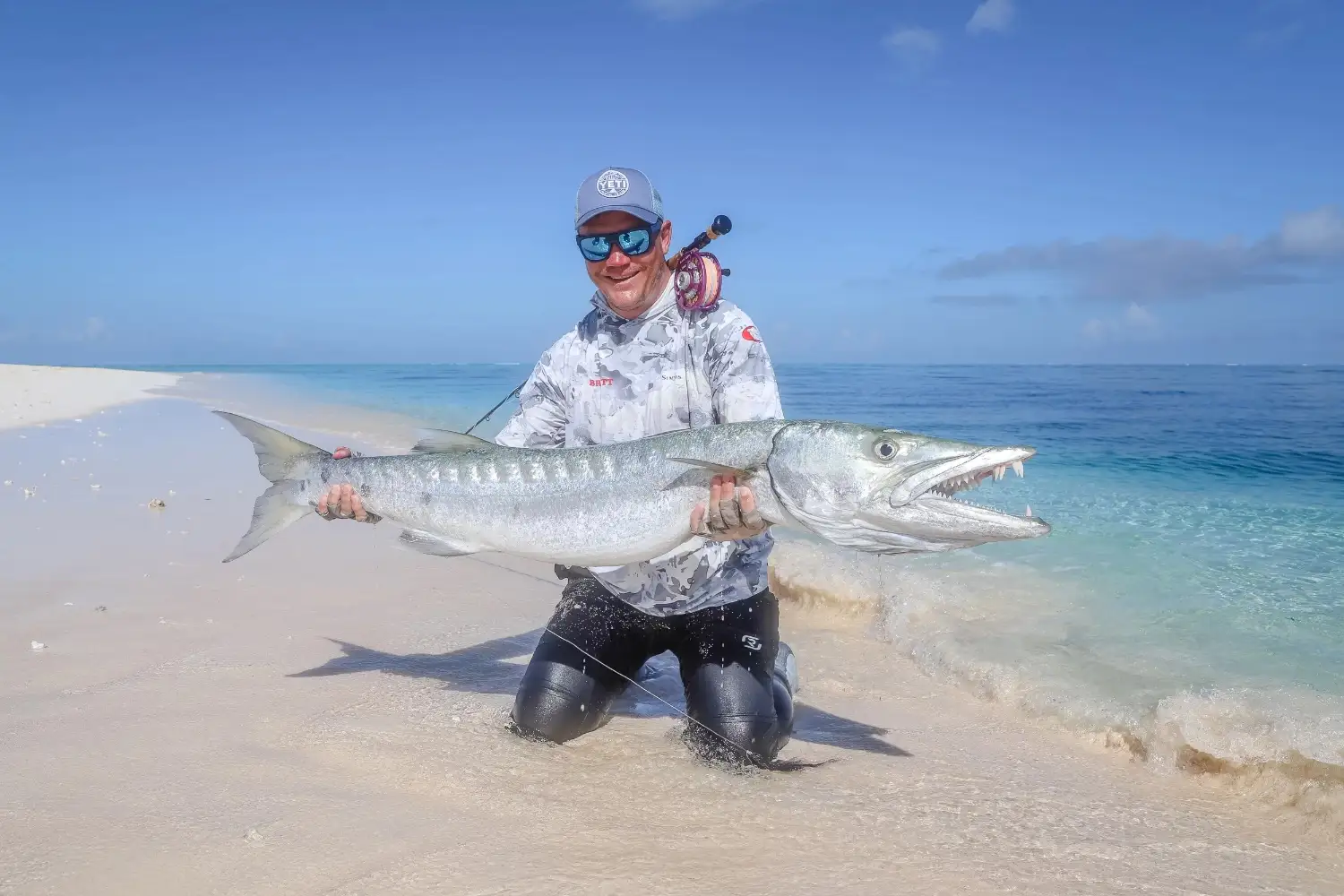
Essential Gear for Barracuda Fishing
When targeting barracuda, the right setup makes all the difference. These fish are notorious for slicing through lines with their sharp teeth, so preparation is key.
-
Rod & reel: Medium-to-heavy spinning or conventional outfits (20–40 lb class).
-
Leader: Single-strand wire (30–60 lb) or multi-strand coated wire. Fluoro gets chewed.
-
Hooks & lures: 4/0–7/0 J-hooks or inline singles on spoons/plugs; flashy Sea Witch skirts over Bonita strips are killers when trolling.
-
Planers: Mix a bridled planer (can reel to the rod) and a standard hand-line planer. Bridles shine when a bigger fish sounds near the boat.
-
Tools: Long-nose pliers, de-hooker, cutters, gloves, and a small first-aid kit (trust us).
-
Bait: Live mullet, blue runners, sardines; strips (Bonita) for speed trolling.
Pro note from the water: Short planer = less forgiveness. When it trips, back the drag off immediately or you’ll pop 60-lb mono. Long planer has more stretch, so you get a little cushion.
Best Locations and Times for Barracuda Fishing
Barracudas are widespread in tropical and subtropical waters, thriving in both inshore and offshore environments.
-
Inshore: Look near mangroves, sandy flats, channels, and patch reefs. Juvenile barracudas often patrol shallows, making them a great target for light tackle enthusiasts.
-
Nearshore: Larger fish are frequently found near reefs, wrecks, and drop-offs where baitfish congregate.
-
Offshore: Around floating debris, weed lines, or buoys, barracudas lurk and ambush schools of fish.
Best Times:
-
Early morning and late afternoon are prime windows for barracuda fishing, especially when light levels are low.
-
On cloudy or overcast days, they may stay active throughout.
-
Tides also influence action—falling tides often concentrate baitfish, drawing barracuda in closer.
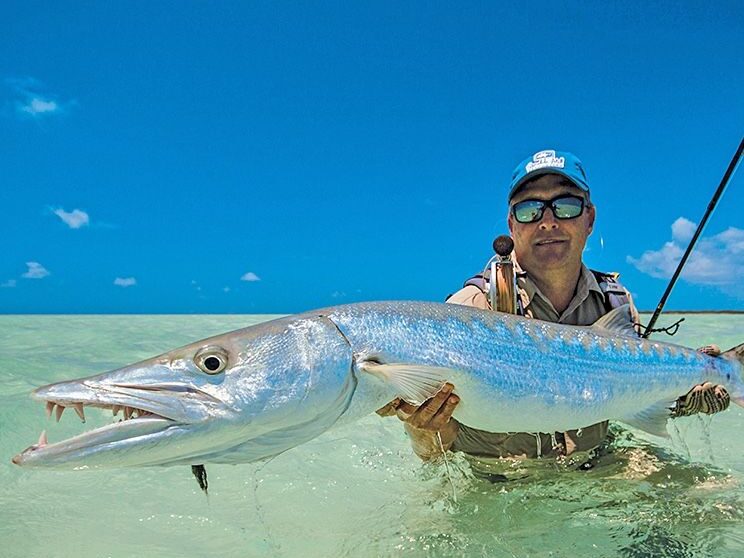
Barracuda Fishing Techniques That Work
1) Trolling (fast & flashy)
-
Run a two-planer spread: one short (closer) and one long (farther).
-
Dress a RJ Boyle Sea Witch + squid skirt + Mylar over a Bonita strip.
-
Boat speed: “In the zone” is brisk—keep baits moving fast to mimic fleeing prey.
-
When bit: Keep the boat in gear initially to avoid slack; wear the fish down, then slow.
2) Casting (targets on structure)
-
Fan-cast shiny spoons or fast plugs along reef/wreck edges.
-
Retrieve quickly with occasional twitches—speed trips the strike reflex.
3) Live bait (high percentage)
-
Free-line or slow-troll mullet/runners on wire.
-
Keep baits lively and visible; circle hooks help in corners of the jaw.
Key principle: Speed kills. Barracudas are sight-driven ambush predators; fast, clean presentations get crushed.
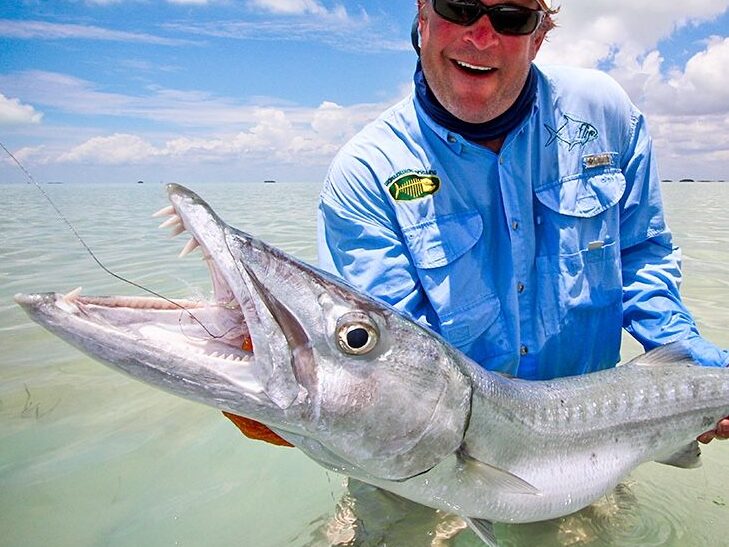
Safety Tips for Barracuda Fishing
Barracudas are thrilling to catch but require extra caution.
-
Handling: Always use long-handled pliers or a dehooking tool to remove hooks. Keep hands and fingers clear of their jaws at all times.
-
On the Boat: Barracuda are known to leap when hooked and can land in the boat. Wear protective eyewear and stay alert.
-
Swimming Safety: Avoid swimming with shiny jewelry in barracuda waters, as they may mistake it for a baitfish flash.
-
Respect the Fish: Many barracuda are released after being caught. Handle them carefully, minimize time out of the water, and revive them before letting go.
Lessons from Barracuda Fishing in Boynton Beach
We launched out of Boynton Beach, Florida for an R&D day: tune planers, maybe sniff a wahoo, and explore local reefs/wrecks. Instead, it turned into a barracuda party.
-
The bite: From the first set, ‘cudas shredded Bonita strips like confetti—~15–20 landed.
-
The spread: Sea Witches over strips on a short and long planer. The long saved fish; the short demanded instant drag backs.
-
Bycatch highlights: Two sailfish and two mahi ate the spread between cuda blitzes.
-
Deck chaos: Unhooking a cuda without a de-hooker led to a thumb bite. Lesson learned—don’t skip safety tools with toothy critters.
-
Reset rhythm: When the long planer got bit, we reeled inside lines first to avoid tangles; then fought the fish.
Even on a “no-expectations” day, speed trolling around structure produced non-stop action—and a masterclass in gear management under pressure.
Check it out on YouTube here!
Quick FAQ
Are barracudas good to eat?
Smaller fish can be fine in some regions, but many anglers release them; they’re not top-tier table fare and ciguatera risk exists in some areas.
What size leader?
30–60 lb wire for most ‘cudas; bump heavier if you’re also targeting wahoo.
How fast should I troll?
Fast enough for strips/plugs to track straight with a tight kick—err on the speedy side.
Final Thoughts
Barracuda fishing is one of the most thrilling pursuits for saltwater anglers. Their aggressive nature, blinding speed, and sheer power make every strike unforgettable. Whether you’re casting lures over reefs, trolling offshore, or free-lining live bait, barracudas demand respect and skill. With the right gear, techniques, and safety awareness, even beginners can enjoy the excitement of battling one of the ocean’s fiercest predators.
Feel free to ask any questions you might have about anything you read in this blog.
We started Reel Guides to make it easy to book fishing trips around the United States.
Click here to browse and book your next fishing charter in Florida!
Readers can benefit from a special promotion code from Mustad Fishing.
Use promo code REELGUIDES for an additional 20% off your next order at www.mustad-fishing.com.