


Do Fish Eat Urchins? Everything You Need To Know
Written By: Captain Kody Michael
Introduction
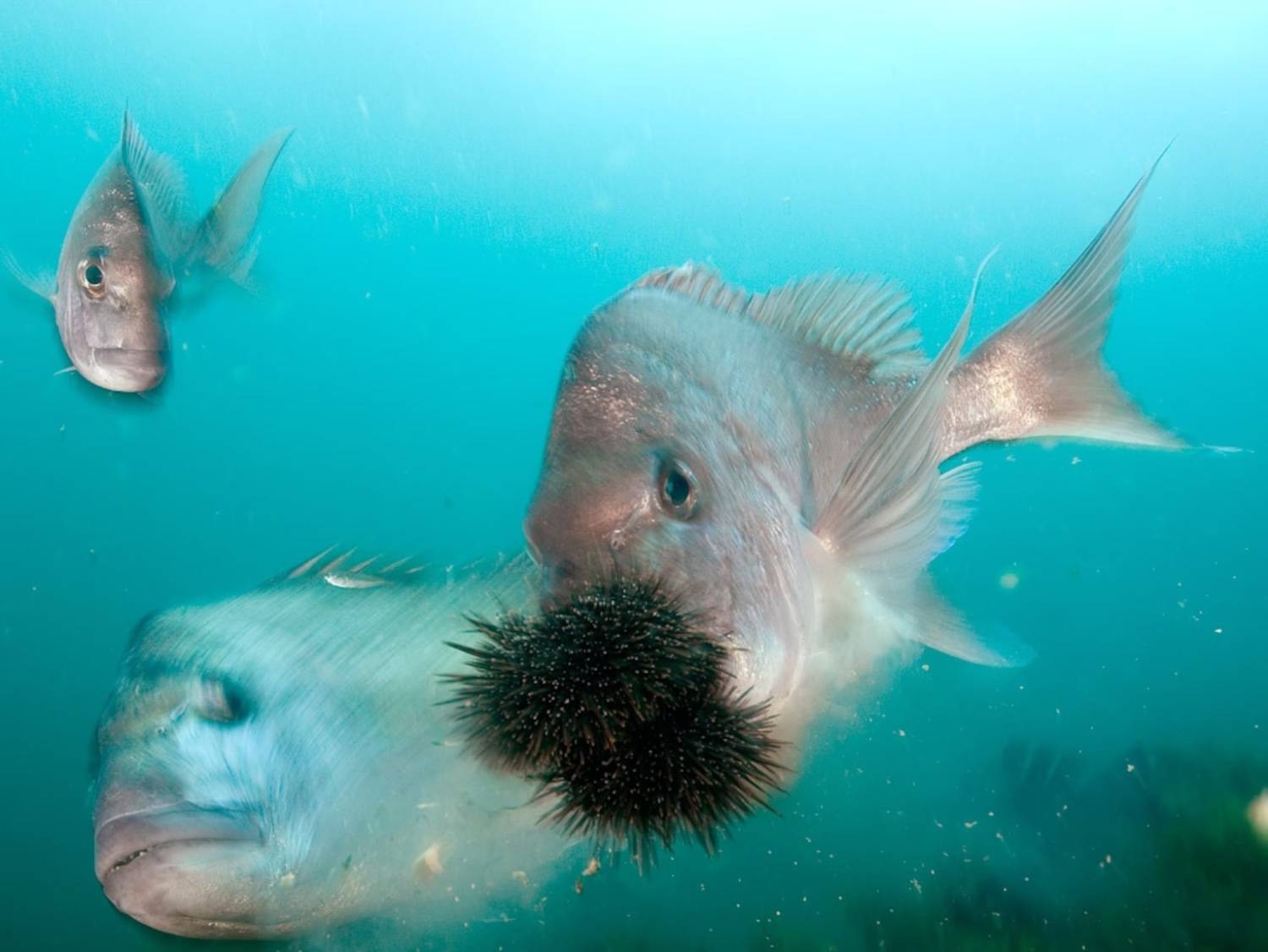
At first glance, sea urchins may not seem like an appealing meal. Covered in sharp spines and built like floating pincushions, these echinoderms look more like underwater hazards than food. But nature always finds a way. Surprisingly, several fish species have evolved specialized techniques to prey on sea urchins, turning these well-defended creatures into a tasty and nutritious meal.
In this blog post, we’ll explore which fish eat sea urchins, how they do it, and why this predator-prey relationship is crucial for maintaining the health of coral reef ecosystems.
What Are Sea Urchins?
Before diving into the fish that eat them, it’s helpful to understand what sea urchins are. These spiny invertebrates belong to the echinoderm family, which also includes starfish and sand dollars. They typically:
-
Inhabit rocky or coral reef environments
-
Feed on algae, helping to clean reef surfaces
-
Move slowly and have few natural defenses beyond their spines
Some species, like the purple sea urchin or long-spined Diadema, can quickly overgraze an area when unchecked, leading to reef damage and loss of biodiversity.
Fish Species That Eat Urchins
Though urchins are protected by tough exoskeletons and spiny armor, several fish have adapted to overcome these defenses.
? Pufferfish
One of the most skilled urchin predators, pufferfish possess:
-
Powerful beak-like teeth capable of crushing hard shells
-
A slow, deliberate hunting style that allows them to flip urchins and bite from the underside
Pufferfish can chew through the urchin’s test (outer skeleton) with ease, consuming the soft inner organs while avoiding the worst of the spines. In fact, pufferfish are sometimes used in aquariums to help control urchin populations.
? Wrasse
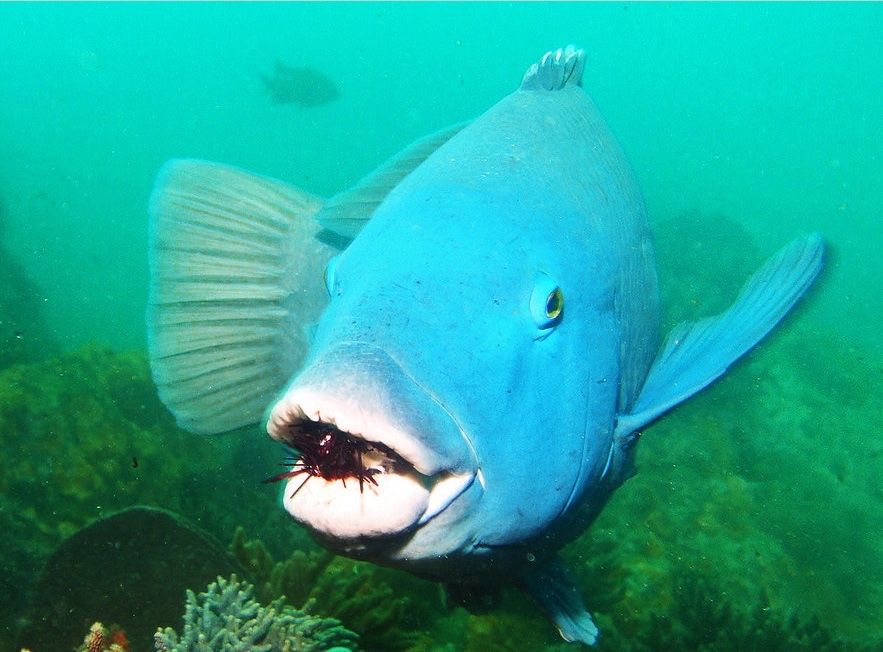
Many species of wrasse, especially larger ones like the California sheephead, are known urchin eaters.
They:
-
Use sharp teeth to pry open or crush urchins
-
Often swallow smaller urchins whole or break apart larger ones
-
Are aggressive reef foragers, helping prevent urchin overpopulation
Wrasse are also known for their cleaning behavior, which helps other reef species stay free of parasites—but when it’s time to eat, they don’t hesitate to hunt.
? Triggerfish
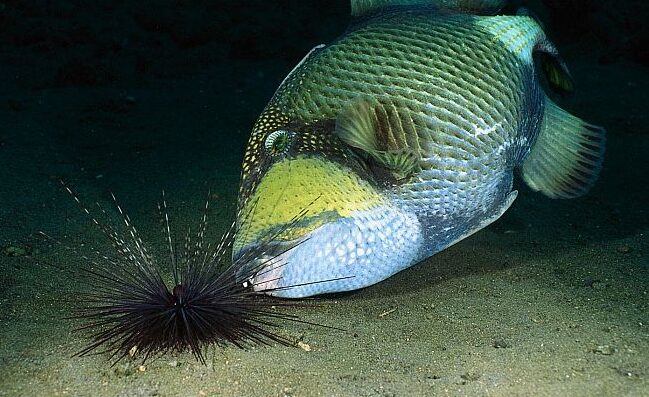
Triggerfish have become famous for their intelligent and methodical approach to cracking open sea urchins.
These reef dwellers:
-
Often flip urchins upside down using their fins or snouts
-
Bite into the urchin’s vulnerable underside
-
Have strong jaws and specialized teeth for crushing tough shells
The titan triggerfish, in particular, is a dominant predator in Indo-Pacific reefs and plays a key role in controlling urchin numbers.
? Tuskfish
Closely related to wrasse, tuskfish are another group known for tool use and problem-solving behaviors.
They’ve been observed:
-
Picking up urchins and smashing them against rocks
-
Using coral or hard surfaces to break shells before consuming the soft interior
This behavior is particularly fascinating because it reflects advanced foraging intelligence rarely seen in fish.
? Hogfish
Found in the western Atlantic and Gulf of Mexico, hogfish are large reef predators that feed on invertebrates—including urchins.
They:
-
Root through sand and coral rubble
-
Use strong jaws to crush shells and exoskeletons
-
Are commonly targeted by spearfishers, who value their mild-tasting flesh
Why Do Fish Eat Urchins?
Sea urchins provide several nutritional benefits to fish that can handle the challenge of eating them:
-
High protein content in the gonads and internal organs
-
Fatty acids and essential nutrients
-
A plentiful, slow-moving food source that doesn’t require long chases
But more than just a meal, this predator-prey dynamic plays a crucial ecological role.
Urchin-Eating Fish Help Maintain Reef Health
When left unchecked, sea urchin populations can explode—especially in areas where their predators have been overfished or removed. This leads to a dangerous phenomenon called urchin barrens, where:
-
Algae-grazing urchins strip reefs of vegetation
-
Coral cannot recover or regrow
-
Fish biodiversity decreases as the reef becomes uninhabitable
Urchin-eating fish help keep reef ecosystems in balance by:
-
Reducing overgrazing
-
Allowing coral and other reef-building organisms to thrive
-
Supporting higher levels of marine biodiversity
Real-world example:
In the Caribbean, the 1980s die-off of Diadema antillarum (a long-spined sea urchin) caused algal overgrowth. Without enough urchins to control the algae—and with few natural fish predators due to overfishing—reefs suffered massive declines.
Conversely, on reefs where fish like triggerfish and wrasse are healthy and abundant, coral cover and reef resilience tend to be higher.
Do Humans Benefit From This Relationship?
Absolutely. Healthy reefs supported by balanced predator-prey dynamics offer numerous benefits to people:
-
Fisheries: Diverse, productive ecosystems mean better fishing opportunities
-
Tourism: Vibrant coral reefs attract divers, snorkelers, and eco-tourism dollars
-
Coastal protection: Thriving reefs absorb wave energy, protecting shorelines from erosion and storms
When fish populations are depleted—especially those that feed on urchins—the entire system begins to unravel. This is why marine protected areas (MPAs), sustainable fishing practices, and reef restoration efforts are critical.
How to Support Reef Health as an Angler or Diver
Whether you’re fishing, diving, or just enjoying the ocean, there are steps you can take to protect the balance between fish and urchins:
? Fish responsibly
-
Follow local size and bag limits
-
Avoid overharvesting key predator species like wrasse, hogfish, or triggerfish
-
Support catch-and-release practices when appropriate
? Avoid damaging coral
-
Anchor boats in sand, not reef
-
Don’t touch or break corals when diving or snorkeling
-
Report signs of bleaching or overgrazing to local conservation groups
? Support conservation
-
Back efforts to create marine reserves and enforce no-take zones
-
Educate others about the role of urchin-eating fish in reef health
-
Volunteer or donate to coral restoration projects
Conclusion
Yes—many fish do eat urchins, and they’ve developed impressive adaptations to make it happen. From the beak-like bite of the pufferfish to the rock-smashing tuskfish, these predators are critical players in the underwater food web. Beyond their hunting prowess, these fish serve a greater ecological purpose: they help keep coral reefs balanced, vibrant, and resilient.
By understanding and protecting these relationships, we ensure that our oceans remain healthy—not just for the fish, but for all of us who depend on them.
Feel free to ask any questions you might have about anything you read in this blog.
We started Reel Guides to make it easy to book fishing trips around the United States.
Click here to browse and book your next fishing charter in Florida!
Readers can benefit from a special promotion code from Mustad Fishing.
Use promo code REELGUIDES for an additional 20% off your next order at www.mustad-fishing.com.