

How Do Whales Sleep? The Incredible Truth
Written By: Captain Kody Michael
If you’ve ever watched a whale glide effortlessly through the ocean, chances are you’ve wondered, how do whales sleep? It seems almost impossible. Whales live in the water, breathe air, travel thousands of miles, and constantly face changing ocean conditions. So when do they actually rest?
The answer is one of the most fascinating adaptations in the animal kingdom.
Unlike humans, whales cannot simply close their eyes and drift into a deep sleep for eight hours. Doing that would prevent them from surfacing to breathe. Instead, they have evolved a remarkable way of sleeping that allows them to rest while staying alive.
Whether you’re curious about humpback whales, sperm whales, blue whales, or dolphins, this guide explains how do whales sleep, why they sleep differently from land mammals, and some surprising facts that most people have never heard.
How Do Whales Sleep?
The short answer is simple.
Whales sleep by resting only one half of their brain at a time.
Scientists call this unihemispheric slow wave sleep. While one side of the brain sleeps, the other side stays awake. This allows whales to continue swimming slowly, remain aware of their surroundings, and most importantly, remember to breathe.
This adaptation exists because whales are voluntary breathers. Unlike humans, who breathe automatically even while asleep, whales must consciously decide when to take every breath. If both halves of the brain entered deep sleep at the same time, the whale could fail to surface for air.
It’s a strange concept to imagine. Half asleep. Half awake. Yet for whales, it’s completely normal.
For a deeper explanation of whale biology and conservation, the National Oceanic and Atmospheric Administration offers excellent educational resources.
Why Do Whales Need Such an Unusual Way to Sleep?
When people ask how do whales sleep, they’re usually really asking another question.
Why don’t they drown?
The answer comes down to evolution.
Millions of years ago, the ancestors of whales lived on land. As they gradually adapted to life in the ocean, they kept one important characteristic of mammals.
They still had lungs.
Fish extract oxygen from water through gills. Whales cannot. Every breath requires them to reach the surface.
That creates a challenge.
Deep sleep and conscious breathing do not work well together.
Instead of evolving gills, whales evolved an entirely different solution. They learned how to let one side of the brain rest while the other remains alert enough to control breathing and monitor the environment.
Honestly, when you stop and think about it, that might be even more impressive than growing gills.
Do Whales Sleep With One Eye Open?
Yes, many whales do.
Because only one hemisphere of the brain sleeps, the opposite eye often closes while the other eye stays open.
If the left side of the brain is resting, the right eye usually closes. Later, they switch.
Researchers believe this helps whales watch for predators, navigate with their pod, and maintain awareness of nearby obstacles while resting.
It sounds like something from science fiction, but it has been documented in multiple cetacean species.
How Long Do Whales Sleep?
There isn’t one answer that applies to every species.
Different whales have different resting patterns.
Rather than sleeping for one long stretch like humans, whales usually take many shorter periods of rest throughout the day and night.
Scientists believe these periods often add up to several hours over a 24 hour period, although much remains unknown because observing sleeping whales in the open ocean is incredibly difficult.
That uncertainty is actually one of the interesting parts of marine biology.
There are still behaviors researchers are trying to understand.
How Do Sperm Whales Sleep?
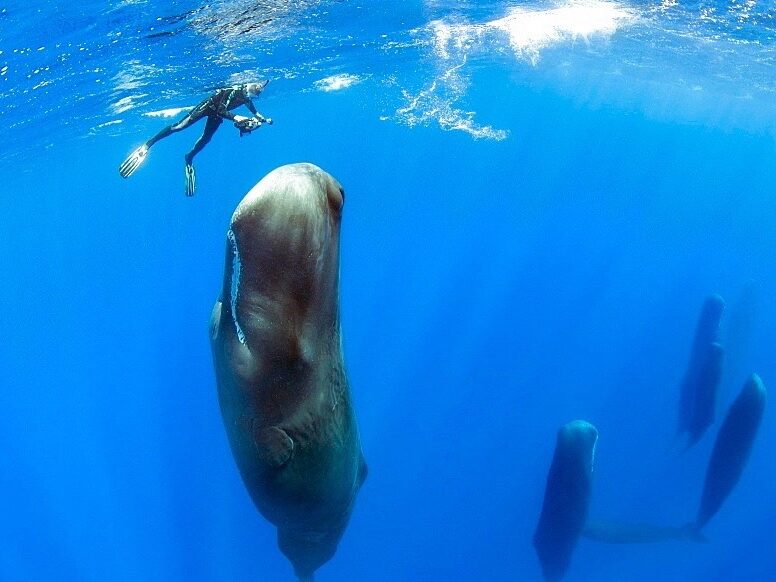
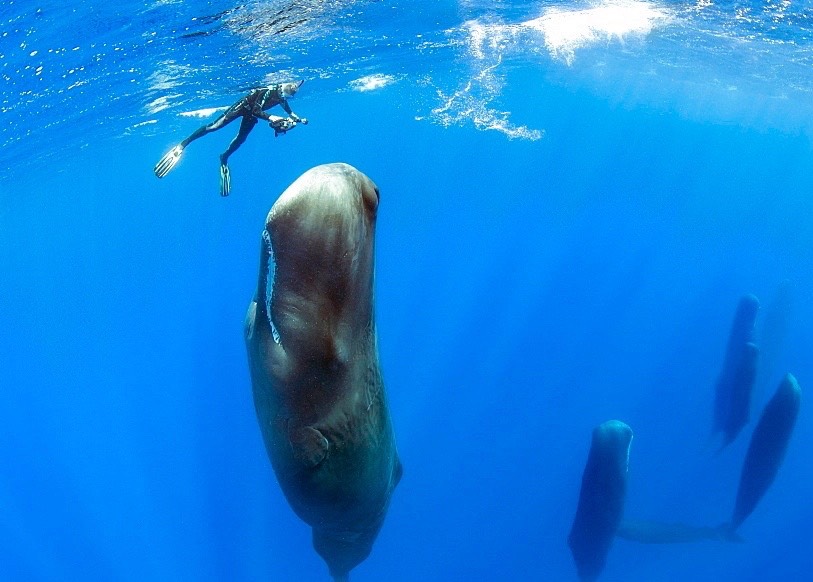
Among all whale species, sperm whales may have one of the most recognizable sleeping positions.
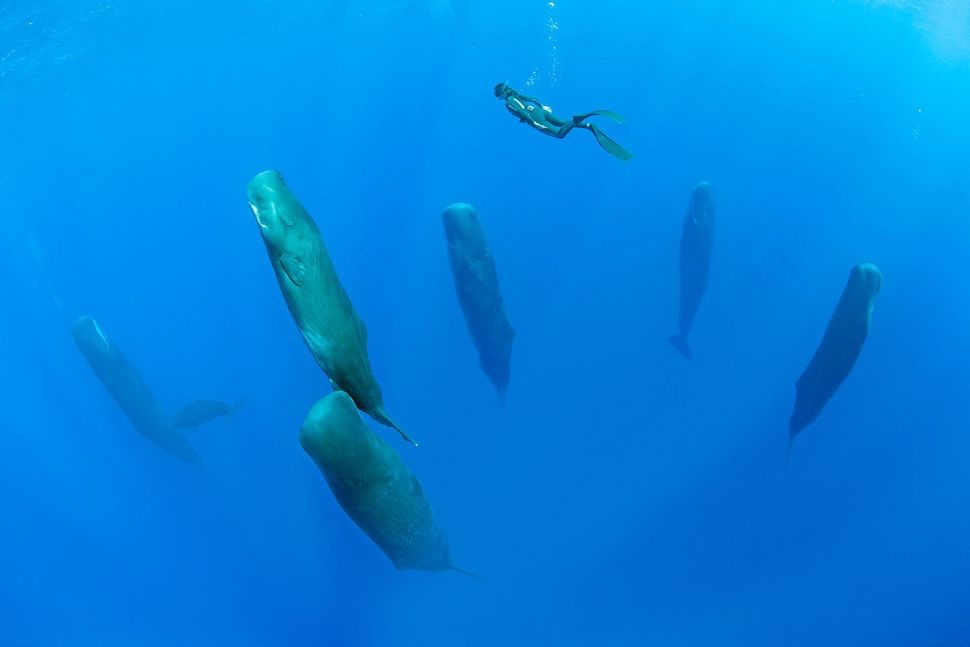
Instead of floating horizontally, they have been observed resting vertically beneath the surface with their heads pointing upward.
Groups of sperm whales sometimes remain almost completely motionless for several minutes while resting together.
When scientists first observed this behavior, it surprised many researchers because the whales appeared almost frozen in place.
It’s difficult to forget once you’ve seen a photograph of it.
Imagine encountering several forty ton animals suspended vertically in the open ocean without moving.
Do Humpback Whales Sleep the Same Way?
Humpback whales appear to use the same basic sleep strategy as other whales, although they may rest differently depending on their age, migration, and surroundings.
Some humpbacks slowly drift near the surface.
Others remain nearly motionless for short periods.
Researchers continue studying wild humpbacks because observing sleep behavior in large migratory whales is far more challenging than studying dolphins or smaller toothed whales.
Do Baby Whales Sleep?
One of the biggest surprises about whale sleep involves newborn calves.
Young whales spend their first weeks swimming almost constantly beside their mothers.
Some studies suggest newborn calves sleep very little during this early period of life.
That probably sounds impossible, especially if you’ve ever cared for a newborn yourself.
Scientists believe constant movement helps young calves regulate body temperature, avoid predators, and stay close enough to nurse frequently.
Can Whales Dream?
Nobody knows for certain.
Humans experience dreaming during REM sleep.
Whales appear to have very limited REM sleep, and some researchers believe many whale species may not experience REM sleep in the same way humans do.
That raises an interesting question.
If dreams help humans process memories and emotions, do whales have another way of accomplishing the same thing?
Researchers still don’t have a definitive answer.
Where Do Whales Sleep?
The location depends on the species.
Some whales rest:
- Near the surface
- Just below the surface
- While slowly swimming
- While drifting with ocean currents
- Vertically beneath the water, particularly sperm whales
Whale watchers sometimes observe resting whales performing a behavior known as “logging.”
Logging happens when a whale floats quietly at the surface, looking much like a floating log.
At first glance, many people assume the whale is inactive.
In reality, it may simply be resting.
How Do Dolphins Sleep?
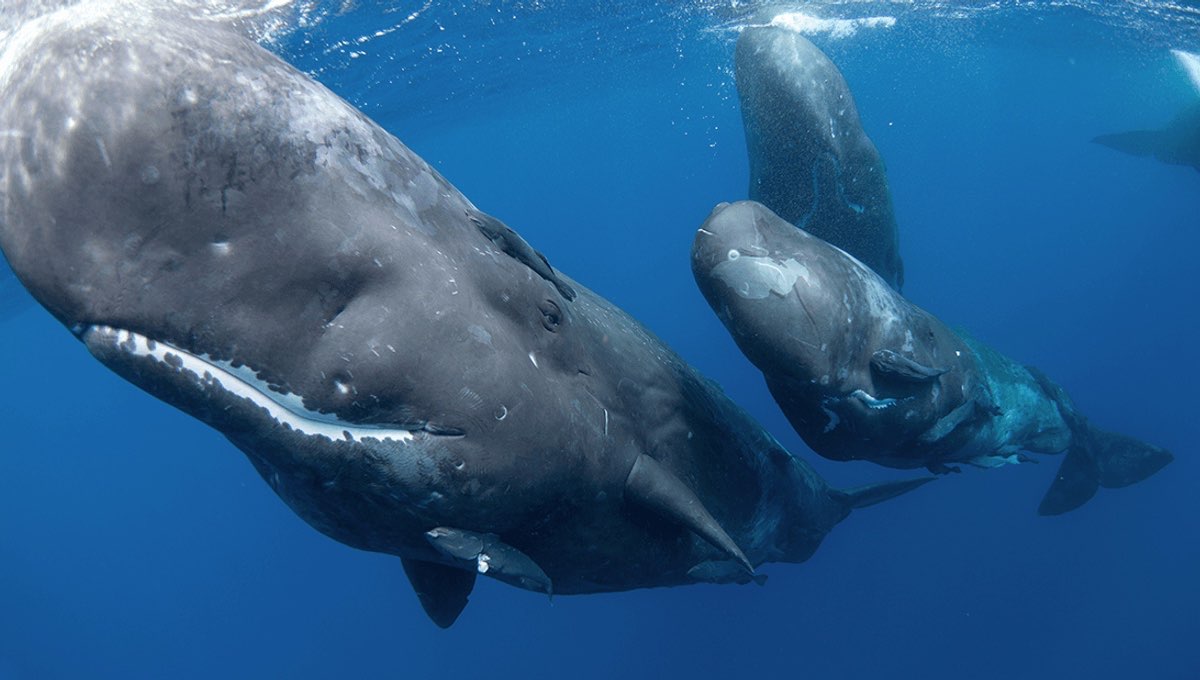
Since dolphins belong to the same group of marine mammals as whales, they sleep almost exactly the same way.
They rest one hemisphere of the brain while keeping the other active.
Many dolphins also close only one eye while sleeping and continue swimming slowly near the surface.
Organizations like Whale and Dolphin Conservation provide outstanding educational information about cetacean behavior and conservation.
Interesting Facts About How Whales Sleep
Here are a few facts that often surprise people.
- Whales cannot breathe automatically while sleeping.
- Most whales continue moving, even during rest.
- One half of the brain stays awake while the other sleeps.
- Some whale species rest vertically beneath the ocean surface.
- A sleeping whale can still detect danger.
- Whale sleep looks completely different from human sleep.
- Scientists continue discovering new information about whale behavior every year.
Considering how much time humans have spent studying whales, it’s remarkable how many questions remain unanswered.
Frequently Asked Questions About How Do Whales Sleep
How do whales sleep without drowning?
Whales sleep with only one hemisphere of the brain resting at a time. The awake side controls breathing and helps the whale surface for air whenever necessary.
Do whales sleep every day?
Yes. Like all mammals, whales need regular sleep, although they achieve it through many shorter periods instead of one long night’s sleep.
Do whales stop swimming when they sleep?
Sometimes. Certain species drift almost motionless, while others continue swimming slowly during rest. It depends on the species and environmental conditions.
Can whales drown while sleeping?
Healthy whales have evolved specifically to avoid this problem through unihemispheric sleep. This unique adaptation allows them to remain conscious enough to breathe while resting.
Do blue whales sleep differently?
Researchers believe blue whales use the same basic strategy of resting one hemisphere of the brain at a time, although studying these enormous animals in the open ocean remains extremely challenging.
Final Thoughts on How Do Whales Sleep
The next time someone asks, how do whales sleep, you’ll know the answer is far more interesting than most people expect.
Whales don’t curl up on the ocean floor or float unconscious at the surface. They rely on one of evolution’s most remarkable solutions, allowing half of the brain to rest while the other half stays alert enough to breathe, navigate, and watch for danger.
It’s one of those adaptations that almost sounds made up until you learn the science behind it.
The more researchers study whales, the clearer it becomes that these animals are extraordinarily specialized for life in the ocean. Every behavior, from migration to communication to sleep, reflects millions of years of adaptation.
If you’re lucky enough to spot a whale resting at sea, remember that you’re witnessing something few animals on Earth can do. It isn’t simply sleeping. It’s performing a delicate balancing act that has allowed whales to thrive in the world’s oceans for millions of years.
Feel free to ask any questions you might have about anything you read in this blog.
We started Reel Guides to make it easy to book fishing trips around the United States.
Click here to browse and book your next fishing charter in Florida!
Readers can benefit from a special promotion code from Mustad Fishing.
Use promo code REELGUIDES for an additional 20% off your next order at www.mustad-fishing.com.